Virtual Urgent Care: What It Treats, What It Can't, and When to Go In Person
What virtual urgent care actually is
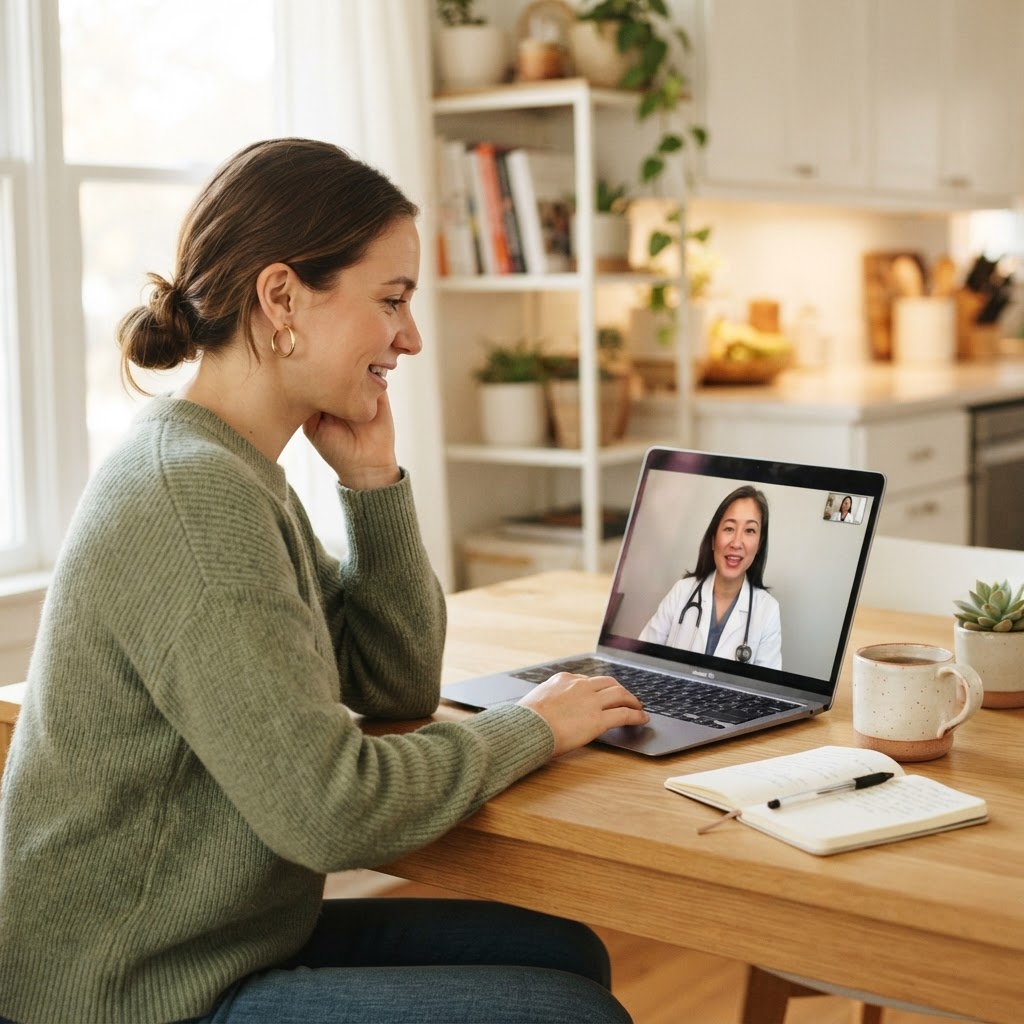
Virtual urgent care is a same-day or next-day video visit for a problem that needs an answer quickly but is not an emergency. You speak with a licensed clinician — often a nurse practitioner, physician assistant, or physician — who can diagnose, prescribe, and tell you whether you need to be seen in person. For a long list of everyday problems it gets you answers in minutes instead of hours, from your own kitchen table.
It is worth being clear about what it is not. A video visit is not an emergency room, it is not a physical exam, and it is not a replacement for a primary care doctor who knows your history over time. Understanding those three limits is the difference between a visit that helps and one that wastes your afternoon.
What a video visit can usually handle
- Respiratory infections — colds, flu, sinus infections, sore throat, mild bronchitis, and seasonal allergies.
- Urinary tract infections — uncomplicated UTIs in adults, including a course of antibiotics when the picture is clear.
- Skin complaints — acne, rashes, eczema flare-ups, poison ivy, and minor skin infections that the camera can see well.
- Eye and ear problems — pink eye, styes, and many ear infections in older children and adults.
- Digestive issues — short bouts of diarrhea, constipation, heartburn, and nausea.
- Prescription refills and adjustments — contraception, allergy medication, and ongoing prescriptions when it is safe to continue them.
- Mental health — anxiety, stress, insomnia, and follow-up for depression or medication management.
- Small worries — a bug bite, a mild sprain, a question that has been nagging you for a week.
What virtual urgent care cannot do
The limits are about hands and equipment, not expertise:
- It cannot examine you. No stethoscope on your lungs, no hands on your abdomen, no otoscope in your ear. Some diagnoses simply need touch.
- It cannot run most tests. No blood work, no X-rays, no strep swab, no urine culture read back to you later that day.
- It cannot do procedures. Stitches, wound cleaning, casting, IV fluids, and draining an abscess all require a room with equipment.
- Some prescriptions are off the table. Controlled substances and anything a clinician cannot safely evaluate remotely are typically not prescribed online.
Call 911 or go to the emergency room instead
Do not start a video visit for any of the following. Call 911 or go to the nearest emergency department:
- Chest pain or pressure, or pain spreading to your arm, jaw, or back.
- Trouble breathing, severe shortness of breath, or lips turning blue.
- Fainting, or a sudden change in consciousness.
- One-sided weakness, facial drooping, slurred speech, or sudden loss of vision — signs of a stroke.
- Severe or sudden abdominal pain, or vomiting blood.
- Bleeding you cannot stop with pressure.
- A severe allergic reaction — swelling of the tongue or throat, hives with difficulty breathing.
- High fever with a stiff neck, confusion, or a severe headache unlike any you have had.
- A serious head injury, or a seizure.
- Thoughts of harming yourself or someone else. In the United States you can call or text 988 at any hour.
- A baby under three months old with a temperature of 100.4°F (38°C) or higher.
These are the situations where minutes matter, and where an online clinician would send you to an emergency room anyway — with a delay in between.
When to skip the video visit and go in person
Some problems fall between the two. Book an in-person urgent care or same-day office visit when:
- A cut may need stitches, or a wound needs cleaning and dressing.
- You suspect a broken bone or a joint that will not bear weight.
- A child has severe ear pain, or a fever lasting more than three days.
- You need an X-ray, a strep test, or blood work to settle the question.
- Symptoms are getting worse after treatment, or a rash is spreading quickly.
- Your clinician tells you on camera that they cannot assess it without an exam — that is a useful answer, not a failed visit.
What a virtual visit usually costs
Prices vary by provider and plan, but the pattern is consistent: a video urgent care visit generally costs less than walking into an urgent care clinic, and far less than an emergency department. Many insurance plans cover telehealth at a copay close to a regular office visit, and some plans count virtual visits as preventive or waive the copay entirely. If you are paying cash, ask for the price before the visit begins — most services publish it. If you have a health savings account, telehealth is often an eligible expense.
How to prepare for a video visit
Fifteen minutes of preparation makes the visit considerably more useful:
- Find a quiet, well-lit room with a stable connection, and prop your phone or laptop so your face and any rash or wound are clearly visible.
- Have your medication list with doses, your allergies, and the pharmacy you prefer in front of you.
- Keep your insurance card, photo ID, and a payment method within reach.
- Take your temperature at home, and your blood pressure if you have a cuff.
- Photograph a rash or wound in daylight, and write down when the symptoms started and what makes them better or worse.
- Bring two or three questions you actually want answered, and take notes — it is easy to forget half of the conversation once the call ends.
Choosing a provider for a virtual visit
Not every clinician offers video visits, and licensing matters: a provider must be licensed in the state where you are sitting when the visit happens. Before you book, confirm that the provider treats your specific problem, offers telemedicine, and is licensed in your state.
On HelloDoc360, provider profiles list specialties, the states a clinician is licensed in, and whether they offer telemedicine, so you can check all three before you book. You can browse telehealth providers for video visits, or search the full directory by specialty and location if you would rather be seen in person.
Common questions
Can virtual urgent care replace my primary care doctor?
No. It is designed for problems that come up suddenly. A primary care doctor tracks your history, coordinates screenings, and manages long-term conditions — which is why a virtual visit usually ends with a recommendation to follow up with them.
Can I get a prescription after a video visit?
Often, yes. Antibiotics, antivirals, and many other medications can be sent electronically to your pharmacy when the clinician can diagnose the problem from your history and what they can see. Controlled substances generally cannot.
Can a virtual visit give me a work or school note?
Many services can, when the visit supports it, but policies differ. Ask before you book if the note is the main reason for the visit.
Is virtual urgent care available for children?
Many providers see children, though some have age minimums, and a young child who cannot describe symptoms may need an in-person exam. Check the provider's age range when you book.
What if I get worse after the visit?
Contact the same provider or service first — they have your notes and can adjust treatment quickly. If you develop any of the emergency symptoms listed above, stop waiting and get emergency care.
The bottom line
Virtual urgent care is a genuinely useful tool for common, straightforward problems, and a poor fit for anything that needs hands, imaging, or immediate intervention. Knowing which is which before you open your laptop is most of the battle.
This guide is for general education and is not medical advice. If you are unsure whether your symptoms are an emergency, call your doctor or emergency services.